EN | CN
On 30 July 2026, the Inland Revenue Board of Malaysia (IRBM) released its new Malaysia Transfer Pricing Guidelines on Controlled Financial Transactions: Intra-Group Loans (MFTIL). The guidance provides a comprehensive framework for assessing, pricing and documenting intra-group loans under Malaysia’s transfer pricing regime.
Adriana Calderon shares her perspective on the evolving tax landscape and the role of collaboration at the SCTP Singapore Tax Congress.
The Inland Revenue Authority of Singapore (IRAS) has updated its Frequently Asked Questions relating to the Reporting of Related Party Transactions (RPT Form), providing additional clarification on the scope of entities and individuals that may be regarded as related parties for reporting purposes.
On 1 June 2026, the OECD released a public consultation draft revising Chapter VII of the OECD Transfer Pricing Guidelines – the chapter dealing with intra-group services. The draft is extensive but does not change the underlying arm’s length principles.
The Inland Revenue Authority of Singapore (IRAS) released the 9th Edition of the Singapore Transfer Pricing Guidelines (TPG) on 4 June 2026. The update introduces targeted clarification on the treatment of share‑based compensation (SBC) in the context of intercompany services arrangements remunerated on a cost‑plus basis.
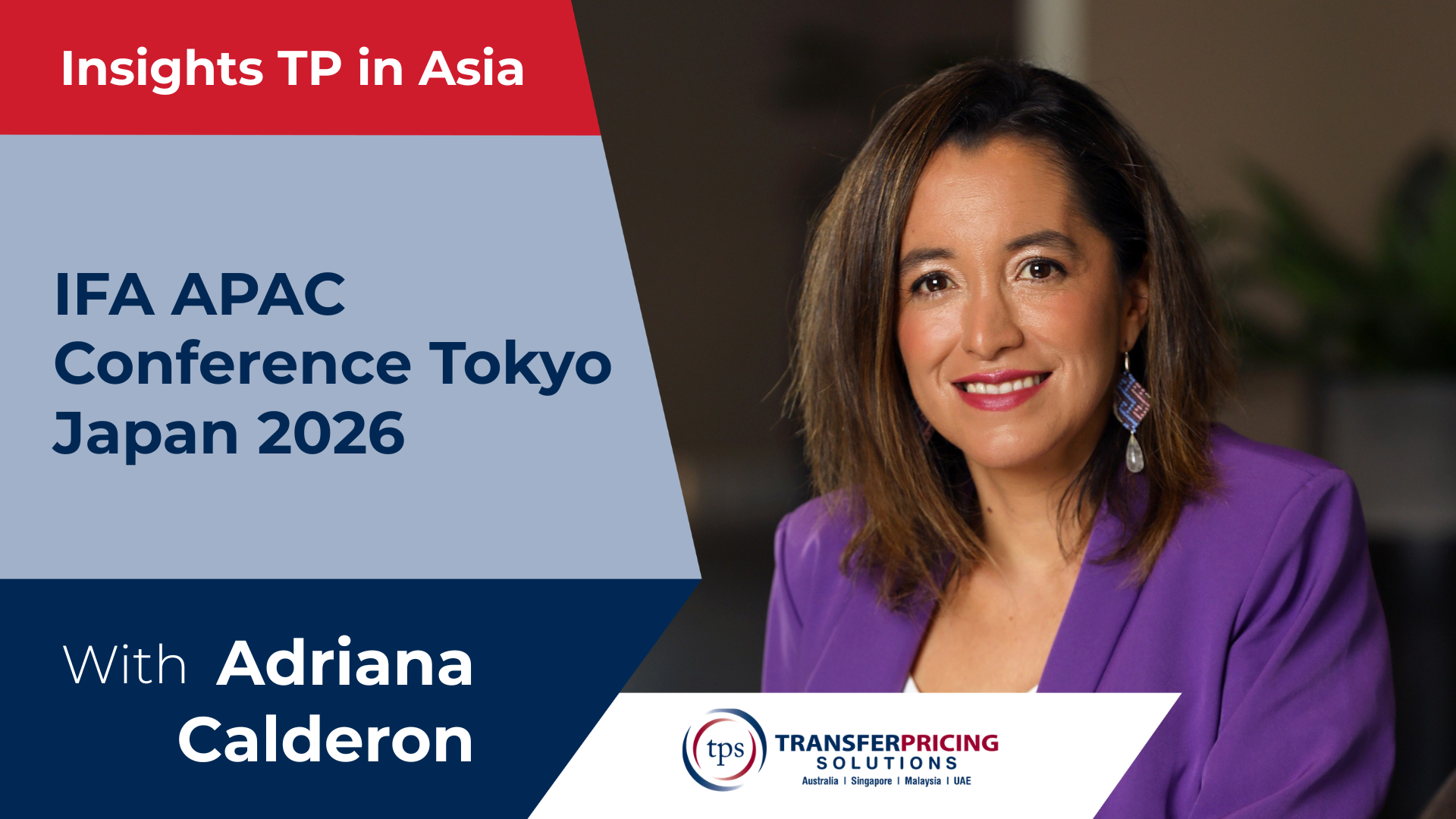
Adriana Calderon, Managing Partner - Asia & Malaysia at Transfer Pricing Solutions, shares insights from the IFA APAC Conference in Tokyo, highlighting key trends in transfer pricing across Asia. She explores regional differences in approach, increasing regulatory complexity, and rising audit activity, while reflecting on the importance of global networks in fostering collaboration and shaping the future of international tax.