Sense and Sensibilities of TP Methods, Workshop Singapore, 28 August 2017
Home • Events • Sense and Sensibilities of TP Methods, Workshop Singapore, 28 August 2017

Home • Events • Sense and Sensibilities of TP Methods, Workshop Singapore, 28 August 2017
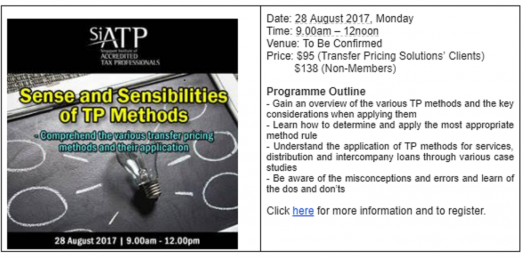
With transfer pricing being increasingly scrutinised, an area that companies and tax authorities may disagree is the correct application of the selected transfer pricing (TP) method. When challenged, companies have to demonstrate why and how the specific method was adopted.
In this session, Ms. Adriana Calderon, our director at Transfer Pricing Solutions Asia will share practical insights on the five common TP methods recognised by the OECD through various case studies.
Register for this session organised by the Singapore Institute of Accredited Tax Professionals and learn key tips to determine and apply the TP method that best suit the type of related party transaction.
Secure your seat NOW! The registration is open until 21 August 2017. A special discount applies to members of SIATP, ISCA, SICC, SMF and TPS Clients.
To register visit https://tinyurl.com/siatpevent-tp-methods.
For further enquiries about the event, please visit www.siatp.org.sg/events, contact Darrick at 6597 5719 / Nabila at 6597 5714 or email to enquiry@siatp.org.sg.Adriana Calderon, Managing Partner - Asia & Malaysia at Transfer Pricing Solutions, shares insights from the IFA APAC Conference in Tokyo, highlighting key trends in transfer pricing across Asia. She explores regional differences in approach, increasing regulatory complexity, and rising audit activity, while reflecting on the importance of global networks in fostering collaboration and shaping the future of international tax.
Malaysia’s transfer pricing framework continues to evolve, with the Inland Revenue Board of Malaysia applying increasing scrutiny to how multinational groups price, document and defend related‑party transactions. For businesses operating in Malaysia, transfer pricing has become a core tax risk area rather than a routine compliance exercise.
Across Asia, transfer pricing audits are becoming more frequent, more detailed and more analytically driven. Tax authorities are no longer limiting their reviews to whether documentation exists. Instead, they are interrogating whether transfer pricing outcomes genuinely align with commercial reality, operational substance and financial results over time.