EN | CN

|
Managing Transfer Pricing in Asia |
Transfer Pricing is an area of tax that is gaining more and more attention from tax authorities and business leaders. One of the main
challenges with TP is that two or more jurisdictions are involved and it is not an easy task to satisfy all of them. Hence, the importance
on practical strategies to manage TP risks in different jurisdictions.
This WEBINAR is designed to share practical knowledge through real life cases studies.
You will learn:
Webinar Schedule
Morning Session
Afternoon Session
Training Methodology
WEBINAR style with Case Studies and examples. Participants can actively contribute and submit questions before the seminar.
Closing Date for Registration - one week before programme or until full enrolment
The Institute of Singapore Chartered Accountants is consistently working on the issue and has teamed up with Adriana Calderon, Director of Transfer Pricing Solutions Asia. Together, we initiated a discussion on how you can manage your transfer pricing exposure. The class is designed as a platform to share practical knowledge through real life case studies.
Save yourself a seat (or two) for the latest transfer pricing development in leading Asian countries! Know who you’re dealing with, their expectations, and how you can prepare yourself for tax reviews and audits. Special discount applies to members of ISCA.
Read more about the event and REGISTER NOW!
https://eservices.isca.org.sg/CourseDetail?coursemasterid=a0g28000002aNYkAAM

Adriana Calderon has extensive international experience with Big Four and mid-tier firms advising
multinational companies in the areas of corporate and international taxation across South America, the US, Australia and the Asia
Pacific Region.
As a TP practitioner, Adriana has advised companies in the Asia Pacific Region across various industries and in a wide range of projects
associated with planning, compliance and dispute resolutions with tax authorities. She has also participated in specialised projects
involving pricing of financial transactions, business restructures and negotiation of APAs. Most recently, she has participated in TP
planning projects to implement BEPS’s Action Plan and country-by-country reporting.
*Asia Tax Awards 2017 by International Tax Review
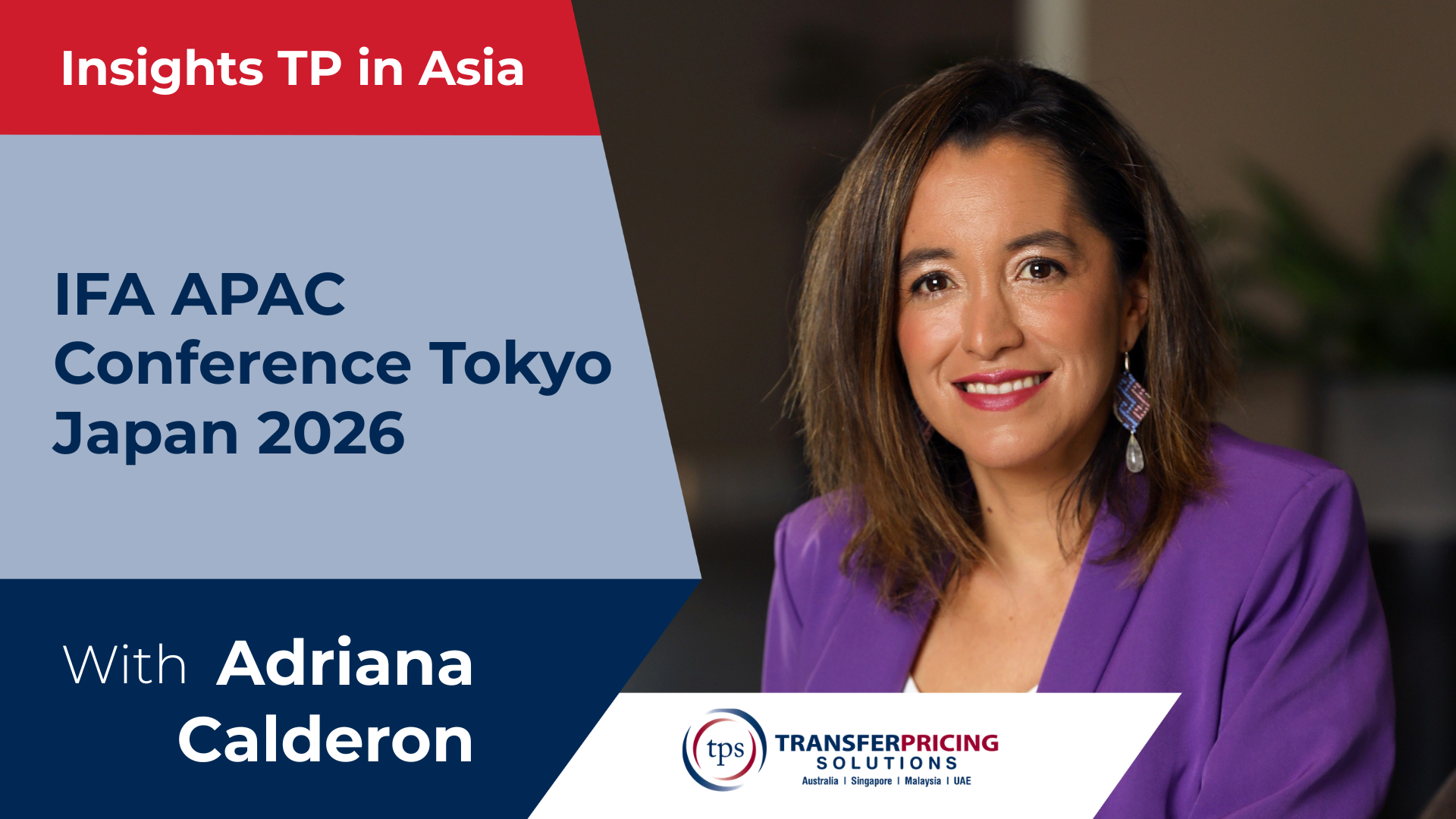
Adriana Calderon, Managing Partner - Asia & Malaysia at Transfer Pricing Solutions, shares insights from the IFA APAC Conference in Tokyo, highlighting key trends in transfer pricing across Asia. She explores regional differences in approach, increasing regulatory complexity, and rising audit activity, while reflecting on the importance of global networks in fostering collaboration and shaping the future of international tax.
Malaysia’s transfer pricing framework continues to evolve, with the Inland Revenue Board of Malaysia applying increasing scrutiny to how multinational groups price, document and defend related‑party transactions. For businesses operating in Malaysia, transfer pricing has become a core tax risk area rather than a routine compliance exercise.
Across Asia, transfer pricing audits are becoming more frequent, more detailed and more analytically driven. Tax authorities are no longer limiting their reviews to whether documentation exists. Instead, they are interrogating whether transfer pricing outcomes genuinely align with commercial reality, operational substance and financial results over time.